

A Chemical Buyer's Basic Glossary: Grades, Standards, Certifications, and Key Terms Explained
Posted by MH on Jun 17th 2026
A Chemical Buyer's Glossary: Explaining Grades, Certifications, Standards and Key Terms
Whether you're sourcing industrial chemicals, food-grade ingredients, or personal care raw materials, the terminology used in chemical specifications can feel like a foreign language. Abbreviations like FCC, USP, ACS, and NSF appear on product listings, safety data sheets, and certificates of analysis — but what do they actually mean, and why do they matter? This guide breaks down the most important vocabulary in the chemical supply industry so you can make confident, informed purchasing decisions.
Why Chemical Terminology Matters for Buyers
When you purchase a chemical or ingredient, you're not just buying a substance — you're buying a level of purity, safety verification, and regulatory compliance. Two products with the identical chemical name can differ dramatically in their actual composition, contaminant levels, and suitability for your application. The grade, certification, and specification language on a product listing is the fastest way to determine whether a chemical is appropriate for your use — before you ever place an order.
Understanding this vocabulary also protects you legally and operationally. Using an industrial-grade chemical in a food or personal care application, for example, can expose your business to liability, regulatory action, and product recalls. Conversely, over-specifying a chemical (buying pharmaceutical-grade when industrial-grade is sufficient) drives up costs unnecessarily.
Let's work through the most important terms, certifications, and grade designations you'll encounter.
Part 1: Purity Grades and Quality Standards
USP — United States Pharmacopeia
USP is one of the most important and widely referenced quality designations in the chemical industry. The United States Pharmacopeia is a nonprofit, scientific organization that sets public standards for medicines, dietary supplements, and food ingredients. When a chemical is described as “USP grade,” it means the product meets the identity, strength, quality, and purity standards published in the United States Pharmacopeia and National Formulary (USP–NF).
USP standards include rigorous testing requirements for:
- Purity — minimum assay values and limits on specific impurities
- Heavy metals — maximum allowable concentrations of lead, arsenic, mercury, and others
- Microbial limits — acceptable levels of microbial contamination
- Residue on ignition — limits on inorganic residue after burning
- pH — acceptable range for solutions
USP grade is commonly required for chemicals used in pharmaceutical manufacturing, compounding pharmacies, dietary supplements, personal care products, and medical applications. Many cosmetic and personal care formulators also specify USP-grade raw materials as a best practice even when not legally required, because it provides a well-defined and defensible quality benchmark.
Examples of common USP-grade chemicals: glycerin (glycerol), propylene glycol, isopropyl alcohol, sodium chloride, hydrogen peroxide, citric acid, sodium bicarbonate.
FCC — Food Chemical Codex
FCC stands for the Food Chemical Codex, a compendium of standards published by the United States Pharmacopeia (the same organization behind USP standards). The FCC establishes purity and quality standards specifically for food-grade chemicals and food ingredients.
When a product is labeled “FCC grade,” it means it has been tested and verified to meet the identity, purity, and quality criteria defined in the Food Chemical Codex for that substance. FCC specifications typically address:
- Minimum assay (purity percentage)
- Acceptable impurities and their limits
- Heavy metal limits (especially lead and arsenic)
- Microbiological requirements
- Specific tests for identity confirmation
FCC grade is the standard you want when sourcing chemicals that will be used in food processing, food manufacturing, beverage production, flavoring, preservation, or any food-contact application. Common FCC-grade chemicals include citric acid, malic acid, sodium hydroxide (for food processing pH adjustment), propylene glycol (as a food additive), calcium chloride, and potassium chloride.
The distinction between USP and FCC can sometimes blur — many chemicals are dual-certified as “USP/FCC” because they meet both sets of standards simultaneously. When you see “USP/FCC” on a product listing, it means the material is suitable for both pharmaceutical and food applications.
GRAS — Generally Recognized as Safe
GRAS stands for Generally Recognized as Safe, a designation under U.S. food law that determines whether a substance can legally be added to food without going through the FDA's full food additive approval process. GRAS is administered by the U.S. Food and Drug Administration (FDA) under the Federal Food, Drug, and Cosmetic Act.
Unlike USP or FCC, GRAS is not a purity grade — it's a legal and regulatory safety status. A substance can be both FCC grade (meeting purity specifications) and GRAS (legally permitted in food) at the same time; the two designations answer different questions. FCC asks “is this pure enough?” GRAS asks “is this substance legally allowed in food at all, and at what levels?”
A substance earns GRAS status one of two ways:
- Common use in food before 1958 — Substances with a long, documented history of safe use in food prior to the 1958 Food Additives Amendment (salt, vinegar, sugar, baking soda, and many traditional ingredients fall into this category)
- Scientific consensus through qualified experts — Substances supported by published, peer-reviewed safety data and the consensus of qualified experts that the substance is safe under its intended conditions of use, even without a long historical track record
GRAS determinations can be made in two ways:
- Self-affirmed GRAS — A manufacturer concludes, based on available science, that its ingredient is GRAS, without formally notifying the FDA. This is legal but offers less regulatory certainty.
- FDA GRAS Notification — A manufacturer voluntarily submits a GRAS notice to the FDA, which reviews the supporting safety data and responds with a “no questions” letter if it has no objection to the conclusion. This is the stronger, more defensible path and is what most serious food and beverage manufacturers look for when qualifying a supplier's ingredient.
It's important to understand that GRAS status is almost always tied to a specific intended use and a specific maximum usage level — not a blanket approval for any use in any food at any concentration. A substance that is GRAS as a preservative at a certain ppm level is not automatically GRAS as a primary ingredient at a much higher concentration. Always confirm that the GRAS status you're relying on matches your actual intended use.
Common GRAS substances include citric acid, sodium bicarbonate, ascorbic acid (vitamin C), calcium chloride, potassium sorbate, xanthan gum, and many other widely used food ingredients and processing aids.
For buyers, GRAS status matters because:
- It's a legal requirement, not a nice-to-have. A food ingredient that is not GRAS and is not an FDA-approved food additive cannot legally be added to food sold in the U.S.
- It affects supplier due diligence. When qualifying a new ingredient or supplier, ask whether the GRAS status is self-affirmed or backed by an FDA “no questions” letter, and request the documentation.
- It's distinct from purity grade. Don't assume GRAS status implies any particular level of purity, and don't assume FCC or USP grade implies GRAS status — verify both independently for the specific substance and use.
ACS — American Chemical Society Reagent Grade
ACS grade refers to chemicals that meet the purity standards established by the American Chemical Society's Committee on Analytical Reagents. ACS reagent grade is typically the highest purity commercially available for most chemicals — these are laboratory-quality materials intended for analytical work, research, and applications where impurities could compromise results.
ACS grade specifications set maximum allowable limits for dozens of specific trace impurities, often at the parts-per-million (ppm) or parts-per-billion (ppb) level. The minimum purity for an ACS reagent grade chemical is typically 95% or higher, and for many substances it is 99.5% or greater.
ACS grade is most commonly specified by:
- Research laboratories
- Quality control labs
- Analytical chemists
- Academic institutions
- Industries requiring reference-standard materials
It's important to note that ACS grade prioritizes chemical purity and analytical performance — it does not automatically imply compliance with food, pharmaceutical, or safety certifications. An ACS reagent may be extremely pure but still contain trace impurities that are acceptable for lab use but not appropriate for human consumption.
Technical Grade / Industrial Grade
Technical grade (sometimes called “industrial grade”) chemicals are produced for industrial applications rather than food, pharmaceutical, or laboratory use. Technical grade chemicals:
- Meet functional performance requirements for their intended industrial application
- Are not held to the rigorous purity and impurity-limit testing required by USP, FCC, or ACS standards
- May contain higher levels of by-products, impurities, or processing aids
- Are generally lower in cost than food or pharmaceutical grade equivalents
Technical grade chemicals are appropriate for a wide range of industrial uses: water treatment, cleaning and janitorial applications, metal processing, textile manufacturing, oil and gas operations, construction, and general industrial processing — as long as the end application does not involve human consumption, pharmaceutical use, or direct skin/eye contact.
A critical point for buyers: never substitute technical grade for food grade or pharmaceutical grade without explicit regulatory and formulation review. The cost savings are rarely worth the liability exposure.
Reagent Grade
Reagent grade is a broader term for high-purity chemicals suitable for laboratory use. All ACS-grade chemicals are reagent grade, but not all reagent grade chemicals have been certified to ACS specifications. Reagent grade generally implies a purity of 95% or higher and suitability for most laboratory applications, though the exact standards can vary by manufacturer.
Laboratory Grade (Lab Grade)
Lab grade chemicals are suitable for general laboratory use but have not been manufactured to meet the strict specifications of ACS reagent grade. They are appropriate for educational use, general lab work, and non-critical experiments where trace impurity levels are not a concern.
Part 2: Certifications for Special Dietary and Religious Requirements
Kosher Certification
Kosher is a Hebrew word meaning “fit” or “proper.” In the context of food and food ingredients, kosher refers to products that comply with Jewish dietary laws (kashrut). Kosher certification is granted by a recognized rabbinical authority or kosher certifying agency after thorough review of the product's ingredients, manufacturing process, equipment, and facility.
For chemical and ingredient distributors, kosher certification matters because:
- The source of raw materials matters. Some chemicals derived from animal sources (gelatin, certain glycerins, some stearates) must come from kosher-slaughtered animals or be of non-animal origin to qualify. For example, glycerin can be derived from animal fats or vegetable oils — kosher-certified glycerin must originate from an approved source.
- Equipment and processing matter. Products may not be processed on equipment that has come into contact with non-kosher substances without proper cleaning protocols.
- Passover restrictions add another layer. Some products are kosher year-round but not “Kosher for Passover,” which prohibits chametz (leavened grain products) and certain other ingredients.
Common kosher certification symbols (called “hechsherim”) include:
- OU — Orthodox Union (the most widely recognized)
- OK — OK Kosher Certification
- Star-K
- Kof-K
For food manufacturers, beverage companies, dietary supplement makers, and many personal care product formulators, sourcing kosher-certified ingredients opens access to a large and growing consumer market that actively looks for the kosher symbol on finished products.
Halal Certification
Halal is an Arabic word meaning “permissible” or “lawful.” In the context of food ingredients and chemicals, halal certification means the product complies with Islamic dietary law as defined in the Quran and Sunnah, and has been verified by a recognized halal certifying body.
Key principles of halal compliance for chemical ingredients include:
- No pork or pork derivatives — This affects a wide range of ingredients. Gelatin, certain glycerins, some fatty acid derivatives (like stearic acid), and certain processing aids can be sourced from pork. Halal-certified versions must come from permissible (halal-slaughtered) animals or plant/synthetic sources.
- No alcohol — Products must not contain ethanol or other alcohols used as solvents or carriers in concentrations that would be intoxicating, with some nuanced exceptions depending on the certifying body.
- No blood or blood by-products
- Humane slaughter requirements — For any animal-derived ingredient, the animal must have been slaughtered according to Islamic law
Halal certifying organizations include the Islamic Food and Nutrition Council of America (IFANCA), Halal Certification Europe (HCE), JAKIM (Malaysia), and many others globally.
The global halal market is enormous — estimated at over $2 trillion in food and beverage alone — and growing rapidly. For buyers sourcing ingredients for products sold into Muslim-majority markets or to halal-conscious consumers worldwide, halal certification is not optional.
It's worth noting that many products are both kosher and halal certified — dual certification is common in the food ingredient industry because both sets of requirements overlap significantly (no pork, no blood, humane processing standards). Look for “Kosher/Halal” dual certification on product documentation when both markets are relevant to your business.
Part 3: Water Treatment and Safety Standards
NSF — National Sanitation Foundation
NSF International is an independent, accredited organization that develops public health and safety standards and certifies products against those standards. In the chemical industry, NSF certifications appear most frequently in the context of water treatment and food equipment safety.
NSF/ANSI 60 — Drinking Water Treatment Chemicals
This is one of the most critical certifications for any chemical used in municipal or commercial drinking water treatment. NSF/ANSI Standard 60 (often written as “NSF 60” or “ANSI/NSF 60”) establishes health effects requirements for chemicals and chemical contaminants that are directly added to drinking water during treatment.
NSF/ANSI 60 certification means:
- The chemical has been evaluated for all contaminants it could potentially introduce into drinking water
- Those contaminants have been tested at realistic dosing levels
- The resulting concentrations in finished drinking water do not exceed one-tenth of the health reference level established for each contaminant
- The product meets labeling and documentation requirements
Chemicals commonly certified to NSF/ANSI 60 include: sodium hypochlorite (bleach used for disinfection), sodium hydroxide (caustic soda used for pH adjustment), hydrochloric acid (for pH reduction), sulfuric acid, aluminum sulfate (alum, used as a coagulant), sodium fluoride (for fluoridation), and many others.
If you are purchasing chemicals for use in a municipal water system, a commercial water treatment application, or any process where the treated water will be consumed by humans, NSF/ANSI 60 certification is typically legally required. Many states and municipalities mandate NSF 60 compliance by regulation. Purchasing non-NSF 60 certified chemicals for these applications can expose water utilities and treatment operators to serious liability.
NSF/ANSI 61 — Drinking Water System Components
While NSF 60 covers chemicals added to water, NSF/ANSI 61 covers materials and components that come into contact with drinking water — pipes, fittings, valves, tanks, and similar equipment. If you supply equipment or materials for water systems, NSF 61 is the relevant standard.
NSF/ANSI 42, 53, 58 — These cover specific types of water filtration and treatment devices (aesthetic effects, health effects, and reverse osmosis systems, respectively).
ANSI — American National Standards Institute
ANSI is the American National Standards Institute, a nonprofit organization that oversees the development of voluntary consensus standards for products, services, processes, and systems in the United States. ANSI does not develop standards itself — it accredits other organizations (like NSF, ASTM, AWWA, and many others) to develop standards through an approved process.
When you see “ANSI” preceding a standard number (like ANSI/NSF 60 or ANSI/AWWA B300), it signifies that the standard was developed through ANSI's accredited process, giving it broader recognition and legitimacy.
AWWA — American Water Works Association
AWWA is the American Water Works Association, the professional organization for the water utility industry. AWWA publishes its own series of chemical standards (the “B series”) that specify quality requirements for water treatment chemicals. Common AWWA standards include:
- AWWA B300 — Hypochlorites (sodium hypochlorite)
- AWWA B301 — Liquid Chlorine
- AWWA B303 — Sodium Chlorite
- AWWA B304 — Anhydrous Ammonia
- AWWA B305 — Aqua Ammonia
Many water utilities specify both NSF 60 certification AND compliance with the relevant AWWA “B” standard when purchasing treatment chemicals. If you're selling to municipal water systems, be prepared to provide documentation for both.
Part 4: Purity, Concentration, and Strength
Assay — The Most Important Number on a Spec Sheet
Assay is the measurement of the actual concentration or purity of the active ingredient in a chemical product, expressed as a percentage. It answers the fundamental question: “How much of what I'm paying for is actually in this container?”
When a product is listed as “Sodium Hydroxide, 98% assay,” it means that 98% of the material (by weight or volume, as specified) is actually sodium hydroxide, with the remaining 2% consisting of moisture, by-products, or other impurities.
Assay is critical for several reasons:
1. You're paying for active ingredient, not water or impurities.
A supplier selling sodium hypochlorite at 10% assay is delivering meaningfully less active chlorine per gallon than a supplier selling at 12.5% assay. If you're comparing prices per gallon, a lower-priced product at lower assay may actually cost more per unit of active ingredient.
2. Formulation accuracy depends on knowing assay.
If you're manufacturing a product with a specific concentration requirement, you must know the assay of your raw material to calculate the correct amount to use. Using a material without knowing its assay — or assuming it matches a nominal specification — introduces variability and potential compliance issues.
3. Assay degrades over time.
Many chemicals are subject to decomposition, oxidation, or moisture absorption. Sodium hypochlorite loses strength over time; hydrogen peroxide decomposes; many reagents absorb atmospheric moisture. The assay on receipt may differ from the assay after six months of storage. Reputable suppliers provide certificates of analysis (COAs) with current assay values, not just nominal specifications.
4. Assay is what quality grades are built on.
USP, FCC, and ACS specifications all set minimum assay requirements. A product cannot legitimately be called “USP grade” if its assay falls below the USP-specified minimum — even if it meets all other tests.
How to Compare Products by Assay
When evaluating competing products, always normalize to cost per unit of active ingredient, not cost per unit of volume or weight:
True cost = (Price per unit) ÷ (Assay %)
Example: Citric acid at $0.80/lb with 99.5% assay vs. $0.75/lb with 95% assay.
- Product A: $0.80 ÷ 0.995 = $0.804 per lb of pure citric acid
- Product B: $0.75 ÷ 0.95 = $0.789 per lb of pure citric acid
Product B is slightly cheaper per pound of actual active ingredient — but Product A may still be the correct choice if your application requires 99.5%+ purity for compliance reasons.
Concentration vs. Assay: What's the Difference?
Assay is most commonly used for solid chemicals and refers to the weight percentage of the active ingredient.
Concentration is more commonly used for liquids and solutions, and can be expressed in several ways:
- Weight/weight percentage (w/w%) — grams of solute per 100 grams of solution
- Weight/volume percentage (w/v%) — grams of solute per 100 mL of solution
- Molarity (M or mol/L) — moles of solute per liter of solution
- Parts per million (ppm) or parts per billion (ppb) — used for very dilute solutions, trace elements, and contaminant specifications
- Normality (N) — equivalents of reactive species per liter, used in acid-base chemistry
Understanding which expression is being used is critical for accurate dilution calculations and formulation work. A “35% hydrogen peroxide” could mean 35% w/w or 35% w/v — these yield slightly different concentrations of active ingredient, and the distinction matters for precision applications.
Specific Gravity and Density
Specific gravity (SG) and density are related measurements that describe how heavy a liquid is relative to water. For liquid chemicals, knowing specific gravity is essential for:
- Converting between weight and volume (gallons to pounds and vice versa)
- Estimating concentration — many liquid chemicals' concentration can be inferred from their specific gravity using published tables
- Pump sizing, tank design, and shipping weight calculations
Water has a specific gravity of 1.000 at 4°C. A liquid with SG = 1.42 (like concentrated sulfuric acid) is 42% heavier than water per unit volume.
Part 5: Documentation and Compliance Terms
COA — Certificate of Analysis
A Certificate of Analysis (COA) is a document provided by the manufacturer or supplier that reports the results of quality testing performed on a specific lot of chemical product. A proper COA should include:
- Product name and chemical identity (including CAS number)
- Lot or batch number
- Manufacturing date and expiration or retest date
- Test parameters and their results (assay, pH, heavy metals, etc.)
- Pass/fail determination against the applicable specification (USP, FCC, ACS, or internal spec)
- Signature or certification from the responsible quality official
When purchasing chemicals for food, pharmaceutical, or personal care applications, always request a COA for the specific lot you are receiving, not just a generic product specification. The lot-specific COA is your evidence of compliance for that shipment.
SDS / MSDS — Safety Data Sheet
A Safety Data Sheet (SDS) — previously called a Material Safety Data Sheet (MSDS) — is a standardized document that provides health, safety, environmental, and emergency response information for a chemical substance or mixture. In the United States, SDS format is regulated by OSHA's Hazard Communication Standard (29 CFR 1910.1200), which aligns with the Globally Harmonized System (GHS) of classification and labeling.
An SDS contains 16 mandatory sections:
- Identification
- Hazard identification
- Composition / information on ingredients
- First aid measures
- Firefighting measures
- Accidental release measures
- Handling and storage
- Exposure controls / personal protection
- Physical and chemical properties
- Stability and reactivity
- Toxicological information
- Ecological information
- Disposal considerations
- Transport information
- Regulatory information
- Other information
Every chemical you receive should come with a current SDS. This is not optional — OSHA requires it, and workers handling chemicals have a legal right to access SDS documents. Buyers should verify that SDSs are current (dated within the last five years is a general guideline, though regulations vary).
CAS Number — Chemical Abstracts Service Registry Number
A CAS Number is a unique numerical identifier assigned to every chemical substance registered in the Chemical Abstracts Service database. CAS numbers are the universal language of chemical identity — they eliminate ambiguity caused by synonyms, trade names, and varying naming conventions.
For example:
- Citric acid: CAS 77-92-9
- Sodium hydroxide: CAS 1310-73-2
- Propylene glycol: CAS 57-55-6
- Isopropyl alcohol (IPA): CAS 67-63-0
When verifying that a product is what a supplier claims it to be, confirming the CAS number match is the first step. Multiple chemicals can share similar common names or trade names — the CAS number eliminates confusion.
INCI Name — International Nomenclature of Cosmetic Ingredients
INCI stands for International Nomenclature of Cosmetic Ingredients. INCI names are the standardized nomenclature system used for ingredients in cosmetics and personal care products globally. They are established by the Personal Care Products Council (formerly CTFA) and are recognized by regulatory authorities in the US, EU, and most international markets.
INCI names are what you see on cosmetic ingredient labels. For example:
- Glycerin (INCI: Glycerin)
- Propylene glycol (INCI: Propylene Glycol)
- Isopropyl alcohol (INCI: Isopropyl Alcohol)
- Sodium lauryl sulfate (INCI: Sodium Lauryl Sulfate)
If you're formulating personal care products, knowing the correct INCI name for each ingredient is mandatory for proper labeling compliance in the US (under FDA regulations) and internationally.
GHS — Globally Harmonized System of Classification and Labeling of Chemicals
The GHS is an internationally agreed-upon system for communicating chemical hazards, developed by the United Nations. It standardizes:
- Hazard classification criteria (how to determine if a chemical is flammable, corrosive, toxic, etc.)
- Labeling elements (pictograms, signal words, hazard statements, precautionary statements)
- Safety Data Sheet format (the 16-section format described above)
Most countries, including the US, EU, China, Japan, and Australia, have adopted GHS into their national regulations. In the US, OSHA's Hazard Communication Standard (HazCom 2012) is the GHS implementation.
DOT — Department of Transportation (Hazmat Classifications)
The US Department of Transportation (DOT) regulates the transportation of hazardous materials under 49 CFR (Code of Federal Regulations). DOT classifications determine how chemicals must be packaged, labeled, and documented for shipping.
Key DOT concepts:
- Hazard Class — Chemicals are assigned to one of nine hazard classes (e.g., Class 3 = Flammable Liquids, Class 8 = Corrosives, Class 5.1 = Oxidizers)
- UN Number — A four-digit number assigned to each hazardous material for international identification (e.g., Sodium Hydroxide solution = UN 1824)
- Packing Group (PG) — I (highest hazard), II (medium), or III (minor hazard) — affects packaging requirements
- Proper Shipping Name — The DOT-required name for the material on shipping documents
Understanding DOT classifications is important for buyers because they affect shipping costs, carrier restrictions, and packaging requirements. Some carriers won't ship certain hazard classes; others require special labeling, placarding, or documentation. When requesting quotes, providing the UN number and hazard class enables accurate freight pricing.
Part 6: Industry Organization and Regulatory Terms
EPA — Environmental Protection Agency
The US Environmental Protection Agency regulates the registration, sale, distribution, and use of many chemicals — particularly pesticides, disinfectants, and certain industrial chemicals. Key EPA programs relevant to chemical buyers:
- FIFRA (Federal Insecticide, Fungicide, and Rodenticide Act) — Governs pesticide registration and labeling. Chemicals marketed for pesticidal purposes (including many disinfectants and sanitizers) must be EPA-registered.
- TSCA (Toxic Substances Control Act) — Regulates the manufacture, importation, and use of industrial chemicals. Recent TSCA reforms have increased scrutiny of certain existing chemical substances.
- CERCLA / SARA (Superfund) — Governs reporting of hazardous substance releases; certain chemicals have threshold reporting quantities.
FDA — Food and Drug Administration
The FDA regulates food ingredients, dietary supplements, cosmetics, pharmaceuticals, and medical devices in the United States. Key FDA frameworks relevant to chemical buyers:
- GRAS (Generally Recognized as Safe) — A designation for substances that are considered safe for their intended use in food. Covered in detail in Part 1 above.
- 21 CFR — Title 21 of the Code of Federal Regulations contains FDA's regulations for food, drugs, and cosmetics. Buyers of food and cosmetic ingredients should be familiar with the relevant 21 CFR sections for their materials.
- cGMP (Current Good Manufacturing Practice) — FDA's manufacturing standards for pharmaceuticals, dietary supplements, and food. Suppliers serving these markets should operate under cGMP.
REACH — Registration, Evaluation, Authorisation and Restriction of Chemicals
REACH is the European Union's primary chemicals regulation (EC No 1907/2006). It requires manufacturers and importers of chemicals in the EU to register substances, assess their risks, and communicate hazard information. For US-based buyers purchasing chemicals for export to the EU, or for EU-based buyers sourcing from US suppliers, REACH compliance is a critical consideration.
SIC Code / NAICS Code
SIC (Standard Industrial Classification) and NAICS (North American Industry Classification System) codes categorize businesses by their primary activity. Chemical distributors and buyers use these codes for:
- Business registration and licensing
- Insurance classification
- Industry research and benchmarking
- Some supplier qualification processes
The primary NAICS codes relevant to chemical distribution are 5169 (Other Chemical and Allied Products Merchant Wholesalers) and 4246 (Chemical and Allied Products Merchant Wholesalers).
Part 7: Additional Terms Buyers Encounter
Anhydrous vs. Hydrated
Anhydrous means “without water.” An anhydrous chemical contains no chemically bound water molecules. Hydrated forms (also called hydrates) contain a specific number of water molecules bound into the crystal structure.
Example: Sodium sulfate comes in two forms:
- Sodium sulfate anhydrous (Na₂SO₄) — no water
- Sodium sulfate decahydrate (Na₂SO₄·10H₂O, also called Glauber's salt) — 10 water molecules per formula unit
The hydrated form is heavier (per unit of active chemical), often easier to handle (less hygroscopic), and may be priced differently. When comparing prices or writing specifications, always clarify whether you need anhydrous or a specific hydrate form.
Hygroscopic
A hygroscopic substance readily absorbs moisture from the surrounding air. Sodium hydroxide, calcium chloride, and many other chemicals are highly hygroscopic. This matters for:
- Storage — Hygroscopic chemicals must be stored in sealed containers away from humidity; open bags or drums will absorb moisture, change weight, and may cake or dissolve
- Weighing and handling — Hygroscopic materials can gain significant weight rapidly when exposed to air, affecting accurate dosing
- Assay — Moisture absorption lowers the effective assay of hygroscopic solids over time
Deliquescent
A deliquescent substance absorbs so much moisture from the air that it dissolves into a liquid. Calcium chloride is a classic example — exposed to high humidity, it will literally turn into a liquid puddle. Proper sealed storage is essential for deliquescent chemicals.
Miscible / Immiscible
Miscible liquids blend completely with each other in all proportions (like ethanol and water). Immiscible liquids do not mix and form separate layers (like mineral oil and water). Knowing whether your chemical is miscible with your process solvents or carrier fluids is important for formulation and application.
pH and Buffer Capacity
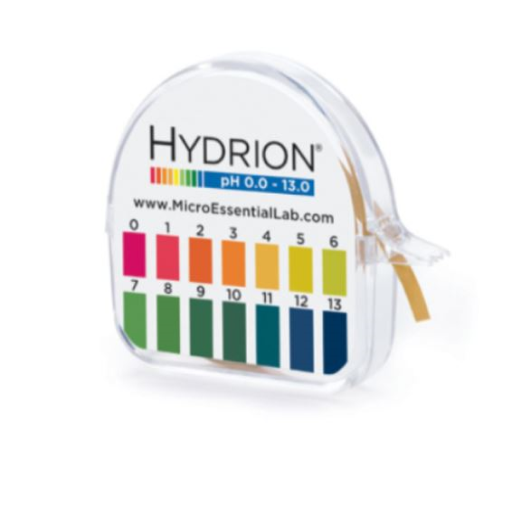
pH measures the acidity or alkalinity of a solution on a scale from 0 (highly acidic) to 14 (highly alkaline/basic), with 7 being neutral. Many industrial processes, food formulations, personal care products, and water treatment applications require careful pH control.
Buffer capacity refers to a solution's ability to resist pH changes when acid or base is added. Buffered solutions (like those containing citric acid/citrate or phosphate systems) maintain a relatively stable pH even when small amounts of acid or base are introduced — important in food preservation, pharmaceutical formulations, and analytical applications.
LOT Number / Batch Number
A lot number or batch number is a unique identifier assigned by the manufacturer to a specific production run of a chemical. Lot traceability is essential for:
- Matching your COA to the specific material you received
- Regulatory compliance (traceability requirements in food, pharma, and cosmetics)
- Investigating quality issues or complaints — if a problem arises with a product, the lot number allows the manufacturer to trace it back to raw materials, production conditions, and other customers who received the same batch
Always record the lot number of every chemical you receive and store that information with your COA.
Shelf Life / Retest Date / Expiration Date
- Shelf life — the period during which a chemical is expected to remain within its specification if stored properly
- Expiration date — a hard date after which the product should not be used (common in pharmaceuticals and some food ingredients)
- Retest date — a date by which the chemical should be retested against its specification to confirm it still meets requirements (common in pharmaceutical raw materials)
For many industrial chemicals, shelf life is not tightly defined — a properly sealed drum of sodium chloride, for example, has essentially indefinite shelf life under proper storage. For reactive or unstable chemicals (hydrogen peroxide, sodium hypochlorite, peracetic acid), shelf life is critical and should be explicitly discussed with your supplier.
Bulk vs. Packaged
Chemicals are typically available in multiple package sizes. Common packaging designations include:
- Bulk — tanker trucks, ISO containers, rail cars (typically thousands of gallons or tens of thousands of pounds)
- Totes / IBCs (Intermediate Bulk Containers) — typically 275–330 gallon liquid containers or 1,000–2,000 lb super sacks for solids
- Drums — 55-gallon liquid or 400–600 lb fiber/poly drums for solids
- Pails — 5-gallon or similar smaller containers
- Cases — multiple bottles or jugs per case (common for consumer-adjacent quantities)
The price per unit of chemical typically decreases as package size increases, reflecting lower packaging and handling costs per pound or gallon.
Putting It All Together: A Quick Reference Checklist for Chemical Buyers
When evaluating a chemical for purchase, work through this checklist:
Identity
- Does the product name match what I need?
- Is the CAS number confirmed?
- Is the molecular formula or structure correct?
Grade and Purity
- Is the grade (USP, FCC, ACS, Technical) appropriate for my application?
- What is the assay / minimum purity percentage?
- Are there specific impurity limits I need to verify?
Certifications
- Is NSF/ANSI 60 required (for water treatment use)?
- Is Kosher certification required for my market?
- Is Halal certification required for my market?
- Are any FDA or EPA registrations required?
Documentation
- Is a lot-specific COA available?
- Is a current SDS available?
- Are there any third-party lab reports or audit certifications?
Logistics
- What is the DOT hazard class and UN number?
- What packaging sizes are available?
- What are the storage requirements (temperature, humidity, compatibility)?
- What is the shelf life / retest date for this lot?
Economics
- What is the true cost per unit of active ingredient (price ÷ assay)?
- Are volume pricing tiers available?
- What are the payment terms?
Final Thoughts
The chemical industry's vocabulary exists for good reason — it creates a precise, shared language that enables buyers and sellers to communicate exactly what is being transferred without ambiguity. As a buyer, fluency in this terminology gives you the ability to evaluate competing products on an equal footing, ask the right questions, identify red flags, and ensure that what arrives at your facility is exactly what your process, your product, and your customers require.
At Level 7 Chemical, we believe informed buyers make better customers — and better partners. We're happy to answer questions about any of the terms, certifications, or standards covered in this guide as they relate to the products we carry. Browse our catalog at level7chemical.com or contact our team directly for specification sheets, COAs, and pricing.