


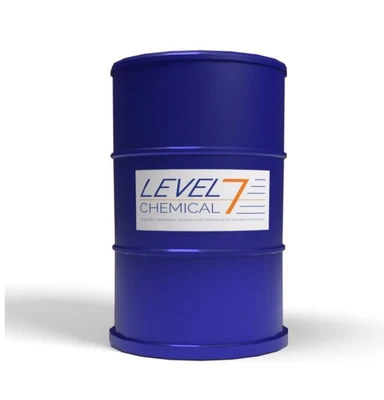
Caprylyl/Capryl Glucoside Natural Surfactant – Plant-Derived APG, 55-Gallon Drum
- Cosmetic Grade
- 70–72% Active Solids
- Plant-Derived
- Readily Biodegradable
- Non-Ethoxylated
- SDS & COA Available
- No Minimum
- No Contracts
Caprylyl/Capryl Glucoside (CAS 68515-73-1) is a nonionic alkyl polyglucoside (APG) surfactant made from C8–C10 fatty alcohols derived from coconut or palm kernel oil and glucose derived from corn. Also sold as Caprylyl/Capryl Glucoside APG or C8–C10 alkyl polyglucoside, this cosmetic grade material complies with Cosmetics Regulation (EC) No. 1223/2009 and is supplied as a 70–72% active solution in water. It ships in a 55-gallon drum with 485 lb net weight. Larger orders are quoted on request.
It is a dark, viscous liquid that dilutes easily in water. Formulators use it for its strong hydrotrope and caustic coupling ability in high-alkaline cleaners, for solubilizing essential oils and fragrance into clear water-based products, and as a gentle, quick-rinsing co-surfactant in personal care and green household cleaners.
Typical Specifications
- Chemical name: Caprylyl/capryl glucoside (C8–C10 alkyl polyglucoside)
- INCI name: Caprylyl/Capryl Glucoside
- Grade: Cosmetic grade, 70–72% active solution
- CAS number: 68515-73-1
- Solid content: 70.0–72.0% (sample COA: 71.58%)
- Water content: 28–30%
- Appearance: Dark viscous liquid
- Color (Gardner): 10–13 (sample COA: 12)
- Odor: No data available
- pH (10% solution): 6–9 (sample COA: 7.27)
- Viscosity (25 °C): 3,500–5,000 mPa·s (sample COA: 3,800)
- Free fatty alcohol: <1.0% (sample COA: 0.4%)
- Sulfate ash: <4.0% (sample COA: 1.96%)
- Water solubility: Soluble
- Density: 1.15–1.17 g/cm³ (about 9.6–9.8 lb/gal)
- Specific gravity: 1.15–1.17
- Flash point: >100 °C (>212 °F)
- Boiling point: About 100 °C (212 °F)
- Melting point: <−5 °C (<23 °F)
- Shelf life: 12 months from date of manufacture
- DOT shipping status: Not regulated as dangerous goods
- Country of origin: China
- Net weight: 485 lb drum
Typical Uses
- Caustic & alkaline cleaners – coupling surfactant that stays stable and keeps other ingredients in solution at high alkalinity
- Bottle washing & steam cleaning – low-foam wetting and coupling for caustic wash and steam systems
- Heavy-duty & food processing cleaners – wetting and soil removal in alkaline degreasers and plant sanitation cleaners
- Glass & hard surface cleaners – quick-rinsing cleaning with low residue for streak-free results
- Green & natural-focused cleaners – plant-derived, non-ethoxylated surfactant for eco-label household and institutional products
- Essential oil & fragrance solubilizing – brings oils and fragrance into clear water-based products
- Facial cleansers & skin care – gentle co-surfactant for clear, low-irritation cleansers and micellar waters
- Body washes, shower gels & bubble bath – boosts foam and mildness alongside primary surfactants
- Shampoos & conditioners – mild cleansing and solubilizing in sulfate-free hair care
- Liquid hand soaps – adds mildness and clarity to natural-focused formulas
- Exfoliating scrubs – rinse-off cleansing base that helps disperse oils
- Emulsifying – co-emulsifier for oil-in-water emulsions and dispersions
GHS Hazard Information

Corrosion
- Classification: Serious Eye Damage, Category 1
- H318: Causes serious eye damage.
- P280: Wear protective gloves, protective clothing, eye protection and face protection.
- P305+P351+P338: If in eyes: Rinse cautiously with water for several minutes. Remove contact lenses, if present and easy to do. Continue rinsing.
- P337+P313: If eye irritation persists: Get medical advice/attention.
Technical Documents
Which Glucoside Surfactant Do You Need?
| Product | Typical Alkyl Chain | Foam Profile | Best For |
|---|---|---|---|
| Caprylyl/Capryl Glucoside (this product) | C8–C10 | Light, quick-rinsing | Caustic coupling, solubilizing oils and fragrance, clear and low-foam cleaners |
| Decyl Glucoside | C8–C16 (C10 rich) | Good, stable foam | Mild cleansers, face and body washes, baby care |
| Coco Glucoside | C8–C16 (coconut) | Rich, creamy foam | Shampoos, body washes, natural personal care |
| Lauryl Glucoside | C12–C16 | Dense, creamy foam | Thicker shampoos, hand soaps, foam boosting |
Need a different grade or strength? Call (855) 927-1777 or Request a Quote and we will help you find the right surfactant and package size.
Frequently Asked Questions
What is Caprylyl/Capryl Glucoside?
It is a nonionic alkyl polyglucoside (APG) surfactant made from plant-derived C8–C10 fatty alcohols and corn-derived glucose. Its short carbon chain makes it an excellent hydrotrope, caustic coupler and solubilizer.
Why is it used in caustic and high-alkaline cleaners?
Many surfactants separate or lose performance in strong caustic solutions. Caprylyl/Capryl Glucoside stays stable at high alkalinity and helps keep other ingredients in solution, which makes it useful in bottle washing, steam cleaning and heavy-duty degreasers.
Is Caprylyl/Capryl Glucoside biodegradable?
Yes. The SDS lists it as readily biodegradable (more than 60% BOD in 28 days, OECD 301D closed bottle test, based on similar products) and states that it meets the biodegradability criteria of Regulation (EC) No. 648/2004 on detergents.
Is the concentrate hazardous?
Yes. As supplied at 70–72% active, it is classified as causing serious eye damage (H318, signal word Danger). Wear safety goggles and gloves when handling the concentrate. It is not regulated as dangerous goods for transport. See the SDS for full details.
Can it solubilize essential oils and fragrance?
Yes. It is commonly used to bring essential oils, fragrance oils and oil-soluble actives into clear water-based products. Run a small test to find the ratio of solubilizer to oil that keeps your formula clear.
How much does a drum weigh and what is the shelf life?
Each drum contains 485 lb net. The product weighs about 9.6–9.8 lb per gallon. The sample COA shows a shelf life of 12 months from the date of manufacture. Keep the drum tightly closed when not in use.
Is a lot-specific Certificate of Analysis available?
Yes. A sample COA is available for download above, and a lot-specific COA is available with your order on request.
We quote multi-pallet, full-truckload and recurring orders. Call us or request a quote and we'll get back to you fast.
Pricing and availability are subject to change without notice. All orders are subject to our Terms of Service.


